
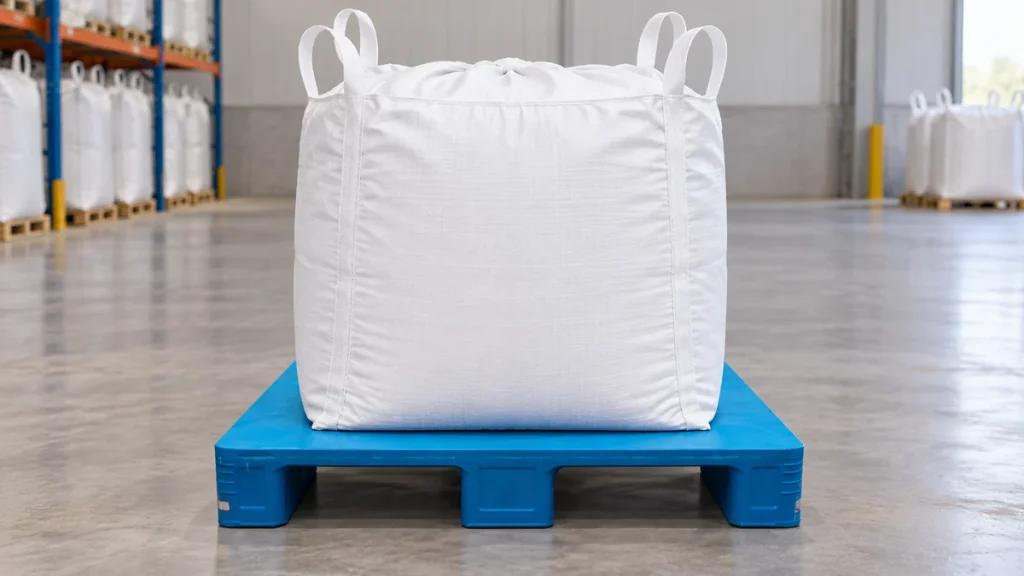
FIBC bulk bags concentrate a large load over a relatively small footprint. A pallet may look suitable when the bag is empty, yet create problems once it is filled, moved over a dock plate or stored for a longer period. The selection should begin with the filled bag and the actual route through the operation.
This buyer guide covers the checks that matter when plastic pallets are used beneath FIBC bulk bags, also called big bags or flexible intermediate bulk containers.
Measure the filled bag, not the nominal bag size
Ask for the filled length, width, height and total gross weight. The base of a filled bag can spread beyond its nominal dimensions, especially when the contents settle after filling. That changes where the load contacts the pallet deck and can leave edges unsupported if the pallet is too small.
Also record the bottom construction of the bag. A flat base, discharge spout, liner or reinforced panel can change the contact pattern. The supplier needs the real bottom view and the intended filled shape, not only a catalogue description of the bag.
Review the deck as a support surface
The deck should support the filled bag where it actually bears weight. A continuous flat surface can be useful when the bag base needs broad contact. An open deck may be suitable in other cases, but the opening pattern and the bag construction need to be reviewed together.
Do not use a published static-load figure as a substitute for this check. Static load refers to a pallet at rest on a supported floor. A concentrated load, an uneven fill, or a bag with a discharge feature can produce a different support condition.
Separate floor storage, movement and elevated storage
A filled bulk bag may be staged on the floor, moved by forklift, transferred across a dock or held on an elevated support system. These are separate conditions. The pallet base and the handling equipment contact the pallet at different points during each one.
For a forklift route, confirm fork length, entry direction, load centre and travel surface. If a pallet jack will be used, check the base arrangement and the clearance at the entry. If the pallet will be placed on racks or another elevated structure, provide the support layout, span and loaded-bag pattern for a separate review. Floor storage does not automatically confirm racking use.
Keep the load stable through the route
FIBC bags can change shape after filling and during transport. Consider whether the bag needs a liner, top closure, wrap, containment frame or another restraint method. The right choice depends on the bag, product and operation. The aim is to prevent movement or edge damage without creating a new handling obstruction.
Pay attention to the route sections that are easy to overlook: door thresholds, dock plates, turns and temporary staging. A load that appears stable in a stationary inspection may behave differently when the truck starts, stops or turns.
Check hygiene and environmental conditions
The handling environment influences the pallet specification. Some operations need regular cleaning. Others need to manage dust, damp floors or outdoor transfer points. Plastic pallets can be cleaned, but the deck design and the cleaning process still need to fit the application.
Where the bulk material has specific handling requirements, confirm those with the bag supplier and the site team. Product images, a colour choice or a generic load rating are not proof that a pallet suits every material or process.
Use a trial with the actual filled bag
Before standardising a pallet, run a trial with the filled FIBC, the normal equipment and the expected route. Record the bag dimensions after filling, the total load, the deck contact pattern and the handling observations. Include starts, stops, turns and the intended storage position.
The trial should check whether the bag remains supported, whether the pallet deflects under the relevant condition and whether equipment clears the pallet correctly. A short record of those observations makes later purchasing decisions more reliable.
Buyer checklist
- What are the filled bag dimensions and gross weight?
- Where does the bag base make contact with the pallet deck?
- Does the bag have a discharge spout, liner or other base feature?
- Which equipment will move the loaded pallet?
- Will the pallet be floor-stored, rack-supported or both?
- What restraint, cleaning and environmental conditions apply?
- Can the proposed pallet be tested with a real filled bag?
The right plastic pallet for an FIBC load depends on the filled bag, the support pattern and the complete handling route. Start with those details before comparing pallet size, deck style or published load figures.