
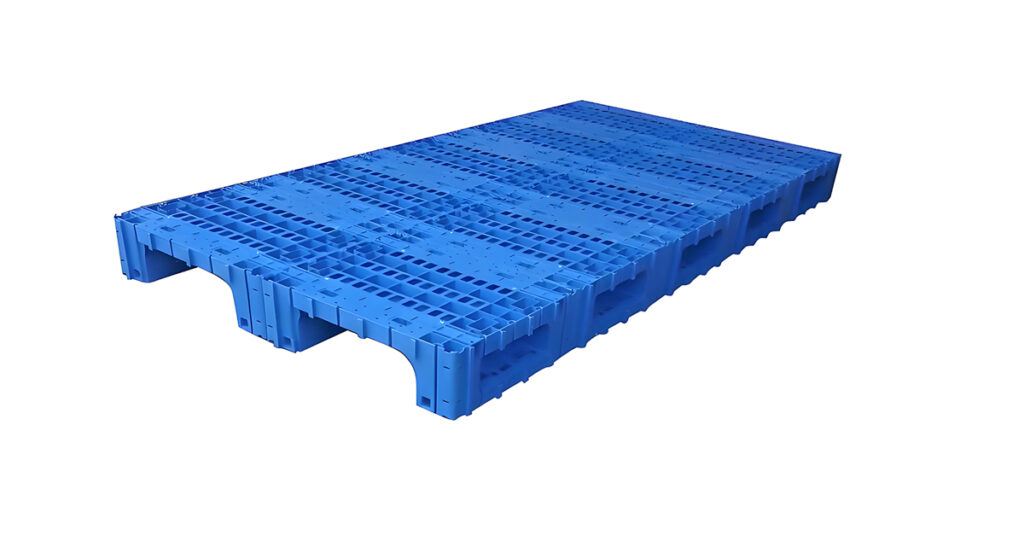
A modular plastic pallet uses an assembled deck and runner structure instead of a fixed one-piece design. This can be useful when a buyer needs to discuss deck type, runner arrangement or replacement components before selecting a pallet. The right configuration still depends on the load, handling equipment and storage support.
This page explains how Zhenghao’s current assembled three-runner pallet options work and what to confirm before choosing one. It does not assign a load figure or racking approval unless that figure is published for the exact model and configuration.
How the Modular Pallet Design Works
In this product range, modular describes an assembled pallet construction. The top deck and bottom runners form a connected structure instead of a single, fixed moulded piece. The arrangement can make maintenance and component replacement relevant to the buyer, but the buyer should still check the exact assembly method and available configuration before ordering.
For example, Zhenghao’s 1200 × 1000 modular flat deck pallet with three runners has a detachable top deck and bottom runners. The page lists a flat solid deck, a three-runner base and four-way forklift entry. Those details describe that model. They should not be treated as a specification for every modular pallet.
What Can Be Configured?
The first practical decision is the deck. A flat deck gives a more continuous contact surface for cartons, bags or other loads that need broad support. A grid deck has openings and should be reviewed against the actual package contact area. Do not choose a deck pattern only because it looks stronger in a photo.
The loaded goods should be part of the inquiry: their footprint, unit weight, whether the base is rigid or flexible, and whether the load is wrapped or unsecured. A pallet that supports a stable tote may not be the best choice for a soft bag or a product with narrow contact points.
Zhenghao also lists an assembled three-runner grid deck pallet. Its product page identifies a ventilated grid surface and an assembled three-runner structure. Comparing this page with the flat-deck model is more useful than comparing generic terms such as “heavy duty” or “industrial.”
When a Modular Plastic Pallet Makes Sense
A three-runner base changes how the pallet is supported on the floor, in handling equipment and in racking. Before selecting one, describe whether the loaded pallet will be floor-stored, transported, used on a pallet truck, placed on conveyors or stored on beam racks.
For beam racking, provide the rack span, support points, loaded pallet weight and the way the load sits on the deck. A published rack-load figure is not a general approval for every rack arrangement. The actual pallet, load and rack support condition need to be reviewed together.
Some assembled three-runner models list optional steel reinforcement. That is an option to confirm for the chosen configuration, not a reason to assume that all versions have the same racking performance. Ask for the specification of the model and configuration being quoted.
What Buyers Should Check Before Selecting a Configuration
A one-piece pallet can be appropriate when the required size, deck and base are already known. A modular pallet adds an assembled structure to the comparison. It may be relevant where the buyer needs to discuss deck type, runner arrangement or replacement of a component. The choice should come from the operating condition, not from a general claim that one construction is better.
Make the comparison with the same information for both options: loaded weight, package contact area, handling equipment, storage support, cleaning requirement and expected route. If one option is intended for beam racking while the other is intended only for floor storage, they are not direct alternatives. The buyer should ask for the model-specific data that applies to each proposed use.
When the requirement is a walled reusable container rather than an open pallet platform, see our modular pallet box system.
Check forklift and pallet-jack access separately
Four-way forklift entry appears on several Zhenghao modular pallet product pages. It tells the buyer where forks can enter, but it does not answer every handling question. Fork dimensions, pallet-jack wheel path, loaded height and the route through doors or equipment should also be checked.
For pallet-jack use, the bottom structure matters. For automated handling, confirm the conveyor or storage-system support requirements with the equipment supplier. Do not use a product image alone to judge compatibility with an AGV, a conveyor or an automated storage system.
Published load figures belong to the named model
Load terminology is often where buyers make the wrong comparison. Static load refers to a pallet at rest. Dynamic load relates to moving conditions. Rack load concerns supported storage and needs the actual racking condition. These are different tests and operating conditions.
The 1200 × 1000 modular flat deck product page lists static, dynamic and rack-load figures for that specific model. Use the product page as the source when comparing it with another model. If the product will be used with different goods, a different deck or optional reinforcement, send the intended condition before relying on a published number.
Available Zhenghao Modular Pallet Options
An assembled pallet may be a sensible choice when the buyer needs a specific deck and runner arrangement, expects repeated industrial use or wants to discuss component replacement. It is not automatically the best option for export, cold storage, racking or pallet-jack use. Each of those applications brings its own selection conditions.
For a buyer comparing modular options, the useful question is not “Which pallet is strongest?” It is “Which published structure matches our load, equipment and storage support?” That question leads to a more reliable shortlist.
Information to Send Us Before Requesting a Modular Pallet Recommendation
- Required pallet length, width and usable deck area.
- Loaded weight and how the goods contact the deck.
- Floor storage, transport, beam racking, conveyor or automated-storage use.
- Forklift and pallet-jack details, including entry direction.
- Whether steel reinforcement or a particular deck type is required.
- Order quantity, destination and any warehouse drawing, rack information, photo or product drawing, if available.
With that information, Zhenghao can compare the appropriate modular plastic pallet options and identify which published specifications apply. That is more useful than selecting a modular pallet from a general description.