
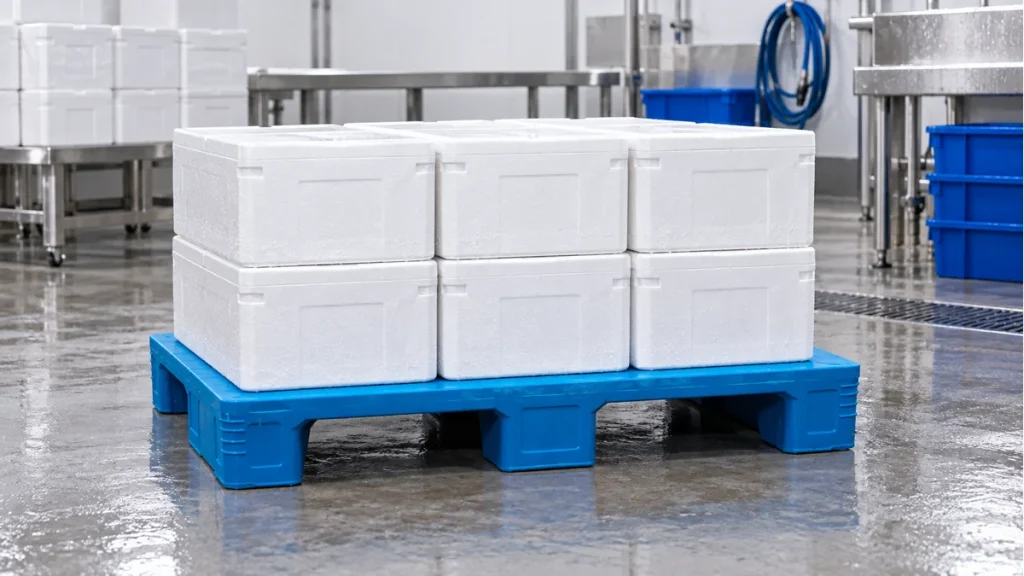
Fish and seafood handling combines wet working areas, packed loads and fast movement between processing, cold storage and dispatch. Pallet selection should start with the real packaging route rather than a general load figure.
Check the load contact
Cartons, insulated boxes and reusable containers can contact a deck very differently. Record the footprint, support points, stack height and wrapping method. A flatter deck may give some packed loads more continuous support, while a grid deck may suit operations where drainage is part of the normal cleaning routine. The right choice depends on the packaging base.
Review cleaning and drainage
In wet areas, buyers should inspect corners, ribs, runners and recessed surfaces against their own washdown routine. State the cleaning chemicals, temperature range and expected cleaning frequency in the enquiry. If direct food contact or a particular compliance standard applies, confirm the required material and documentation with the supplier before ordering.
Separate handling from storage
Forklift handling, pallet-jack handling, vehicle movement, floor staging and rack storage need separate checks. Confirm entry direction and clearance with the actual equipment. If loaded pallets will enter beam racking, assess the beam support arrangement, span and applicable rack-load rating. Static load alone does not confirm rack suitability.
Include the empty return route
Empty pallets can create a separate storage problem. Nestable and stackable structures work differently when returned empty. Review loaded moves and empty returns as two parts of the same route.
See our plastic pallets for fish and seafood applications for available options. A useful enquiry includes the packed load, handling equipment, storage method and cleaning conditions, so the pallet can be matched to the real job.