
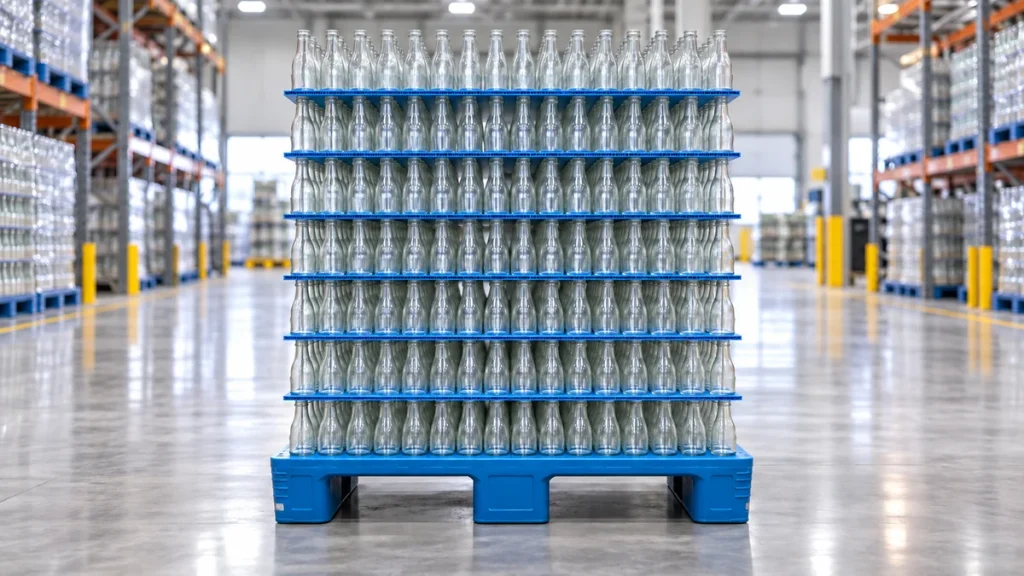
Glass bottles are unforgiving loads. A pallet can look adequate when it carries a sealed bottle load on a warehouse floor, then show a problem when the same load is stacked, moved through a turn, or set down unevenly. Buyers should start with the bottle pack and the handling route, rather than selecting a pallet from a photo alone.
This guide covers the practical questions to ask when choosing plastic pallets for glass bottle logistics. It is aimed at buyers moving bottled beverages, sauces, oils, personal-care products or other carton-packed glass goods.
Start with the carton base, not the bottle
Glass bottles may travel in cartons, trays, shrink-wrapped packs or returnable crates. Where bottles are stacked in layers, corrugated polypropylene hollow-board sheets can separate the layers and protect the pack. A full unit load commonly has seven to nine bottle layers. The pallet therefore needs to support the actual load base. Measure the footprint of the layer or tray and check where its weight lands on the deck. A load that bridges large deck openings can flex more than expected, even when the pallet’s overall capacity appears suitable.
A flat deck can give broad, continuous support beneath cartons. An open deck can also work when the carton base, pack pattern and load distribution are suitable. The choice depends on the packaging underneath the bottles, not on a general rule that one deck style fits every bottle line.
Check how the load is built
Ask for the normal pallet pattern before comparing models. Include the bottle layer or tray dimensions, layers per pallet, separator-sheet arrangement, overhang, stretch-wrap method and the intended stack height. Small gaps at the load edges can turn into a stability issue when a heavy glass load is accelerated or stopped.
Loads with a dense, even carton pattern generally behave differently from mixed cases or small packs. If the outer cartons carry only part of the load, inspect whether the deck supports those areas. A simple top-view drawing of the cartons over the pallet deck is often more useful than a broad request for a “heavy-duty” pallet.
Separate static, dynamic and racking conditions
Glass bottle loads may spend time on the floor, in a staging area, on a conveyor interface, in block storage or on warehouse racking. These are different conditions. Static load describes a pallet at rest on the floor. Dynamic load applies while it is being moved. Racking performance depends on the rack support arrangement, the span, the load distribution and the actual pallet design.
Do not treat a floor-storage figure as proof that the same pallet suits a beam rack. Where racking is part of the route, provide the rack drawing, support points and loaded pallet weight to the supplier. The same care applies to tall bottle loads, where deflection can affect carton alignment and overall stability.
Match the base to the handling equipment
Forklift forks, pallet jacks, conveyors and automated equipment do not contact a pallet in the same places. Confirm the entry direction and the clearance required by the equipment in use. For pallet-jack handling, the base arrangement matters as much as the deck. For a rack or automated system, the support pattern and permitted deflection need their own review.
It is also worth checking the less obvious moves: loading a truck, crossing dock plates, turning into a cold room, or returning empty pallets. A pallet that handles well in one part of the operation can create delays elsewhere if the wheels, forks or guides do not meet the correct support areas.
Plan for wet areas and cleaning
Glass bottle logistics often includes washdown zones, beverage filling areas or cold storage. Plastic pallets can be cleaned, but the correct deck and base design still depends on how water, debris and packaging residue are managed. Review the cleaning method, drainage requirement and whether the pallet needs to be used repeatedly in a controlled area.
Material selection should also follow the operating environment and the product specification. Do not assume that a colour, a product image or a generic food-related description establishes suitability for a particular process. Ask for the applicable product data and confirm the use case before purchase.
Use a trial that reflects the real route
Before a larger order, test a loaded pallet with the real cartons and the normal handling equipment. Include the moves that cause the most stress: long forks, uneven floor transitions, turns, rack placement and transport loading where applicable. Watch for carton deformation, load movement, deck contact and pallet deflection.
A useful trial produces a short record: the pack pattern, total load, equipment used, storage condition and observations. That gives the buyer and supplier a clear basis for deciding whether a deck, base or reinforcement option needs to change.
Buyer checklist
- What is the exact carton or crate footprint on the pallet deck?
- Where do the heaviest cartons sit in each layer?
- Will the loaded pallet be stored on the floor, in a rack, or both?
- Which forklift, pallet jack, conveyor or automated interface will handle it?
- What cleaning, wet-area or cold-storage conditions apply?
- Can the proposed pallet be tested with the actual bottle pack before rollout?
The best choice for glass bottle logistics is the one that supports the real pack pattern and remains stable through the full handling route. Start with the cartons, document the operating conditions and have the proposed pallet checked against the load and equipment that will actually be used.