
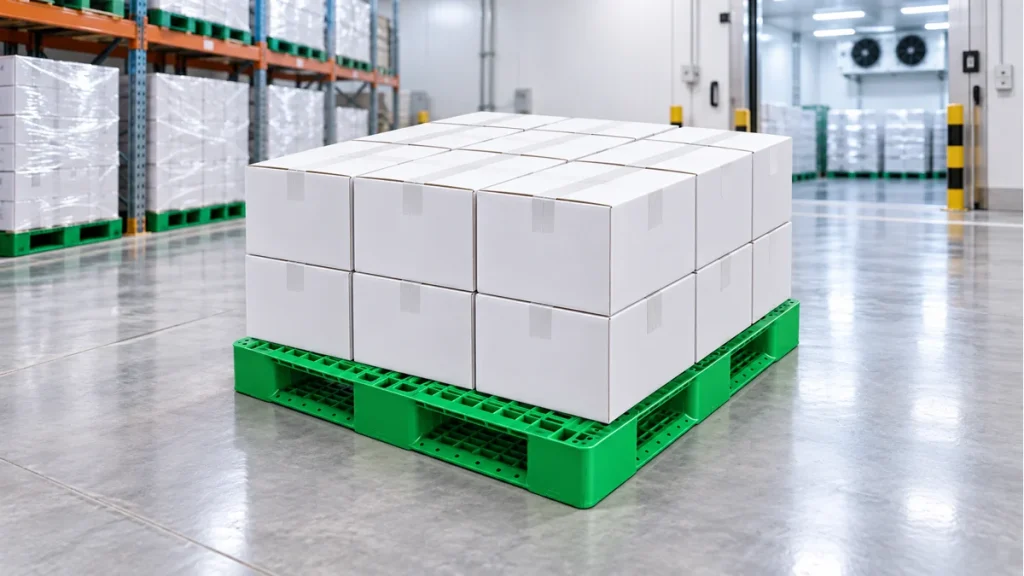
Meat and poultry logistics put ordinary pallet assumptions under pressure. Loads may move between a processing area, a chilled store, a dispatch dock and a vehicle in a short period. Moisture, washdown routines, carton condition and the handling route all affect the choice. A pallet that works for dry packaged goods is not automatically the right fit for this environment.
This guide is for buyers moving packed meat, poultry, ingredients or reusable containers. It focuses on the questions that should be settled before selecting a plastic pallet, rather than treating one deck design or material as the answer for every operation.
Start with the actual load, not a generic weight figure
Total load weight matters, but it is only part of the job. Ask how the cartons, totes or containers contact the deck. A broad, even carton base spreads load differently from narrow cases, bags or containers with concentrated feet. A pallet may look suitable under a uniform test load and still need a different design when the real support points are uneven.
Document the loaded footprint, stack height, centre of gravity and whether the load is wrapped. These details help a supplier compare the deck and base with the real use case. They also make it easier to discuss dynamic handling and storage separately.
Choose the deck around support, drainage and cleanability
A grid deck can allow water and debris to pass through, which may suit operations with regular washdown. A flatter deck can give cartons more continuous support. Neither choice is automatically better. The carton base, moisture exposure and cleaning method should decide the balance.
Look closely at corners, ribs, runner transitions and any recessed areas. These areas need to be practical to inspect and clean within the site’s normal routine. If a pallet may have direct contact with food, confirm the required resin grade and local compliance requirements with the supplier instead of relying on a general product description.
Separate floor handling from racking and storage
Many meat and poultry loads are staged on the floor, but some routes also include rack storage, conveyors or automated equipment. Those are different conditions. A pallet used on the floor may not need the same support characteristics as one used on beams. Racking suitability should be confirmed against the actual beam layout, supported span, load distribution and the applicable load rating.
The same rule applies to empty-pallet storage. Nestable designs can reduce the space needed for returns, while stackable or double-sided designs may suit other storage and handling patterns. Treat loaded movement and empty returns as two separate questions.
Check the handling route in detail
Forklift entry, pallet-jack entry and conveyor contact all depend on the pallet base and the equipment used. Confirm the entry direction and fork opening with the real trucks on site. For pallet-jack use, ask for clearance and entry compatibility rather than assuming that a four-way forklift entry means the same result for a jack.
Also review dock plates, vehicle floors, turns and transfer points. A pallet can be strong enough for the load but still be a poor operational fit if it catches at a transfer point or does not suit the site’s handling routine.
Consider chilled and wet operating conditions
Cold rooms and wet processing areas introduce practical issues beyond load capacity. Condensation can affect slip risk and carton performance. Frequent washing can make drainage, accessible surfaces and drying time more important. The purchase specification should state the expected temperature range, cleaning chemicals and washdown frequency so the material and design can be reviewed for the intended environment.
For a broader view of available options, see our plastic pallets for meat and poultry applications.
Ask for a use-case review before ordering
A useful enquiry includes more than a pallet size. Send the load weight, carton or container footprint, maximum stack height, handling equipment, storage method and cleaning conditions. If the pallet will enter racking, include the rack support arrangement. If it will move through a cold room, state the temperature range and the cleaning routine.
That information lets the supplier compare suitable pallet structures without turning a general catalogue choice into a guess. It also helps buyers avoid selecting a pallet only because its static-load number looks high.
Buyer checklist
- What parts of the deck support the actual carton or container base?
- Will washdown, drainage and inspection be part of daily operation?
- Which forklift, pallet jack, conveyor or transfer points will touch the pallet?
- Will the loaded pallet go on the floor, in a vehicle, on racks or through automation?
- What is the empty-return and storage method?
- Are there any direct-food-contact or regulatory requirements that need confirmation?
The right plastic pallet for meat and poultry processing is the one that matches the real load, hygiene routine and handling route. Confirm those conditions before ordering, then compare deck, base and material options against the job the pallet will actually do.