
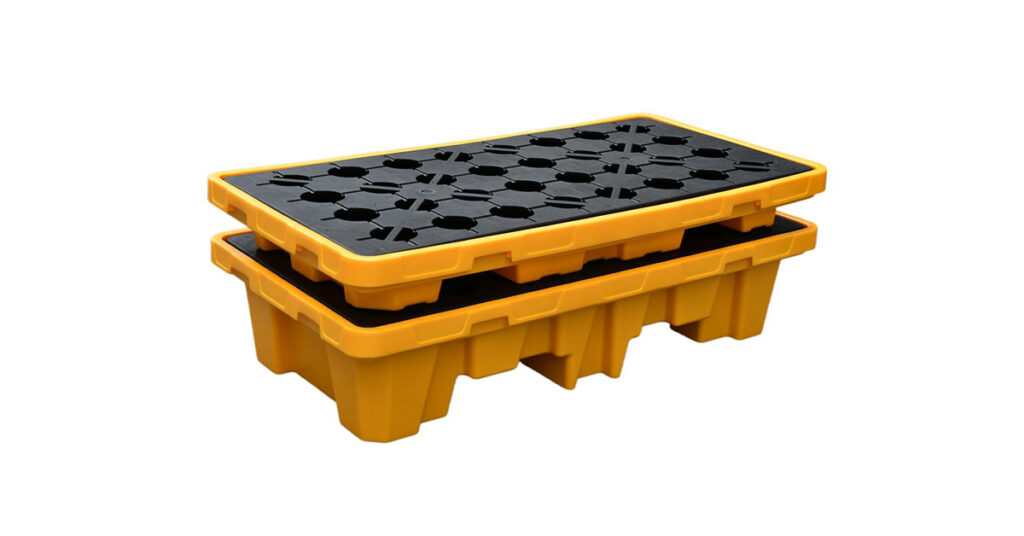
A spill containment pallet sits beneath drums, IBCs or smaller liquid containers and provides a sump for leaks and spills. Choosing one starts with the containers and the way they are handled. Drum count matters, but it is only one part of the decision. The required containment volume, pallet footprint, published load, platform height and access for handling equipment can change which model fits the job.
This guide explains what to compare before asking for a quotation. It does not replace a site’s own safety procedure or local requirements for the stored liquid.
Why spill pallets are used
Leaks can spread across floors, reach work areas and complicate cleanup. A containment pallet gives escaped liquid a defined collection area beneath the container. It can be used in drum storage, filling areas, maintenance points, laboratories and other locations where liquids are handled.
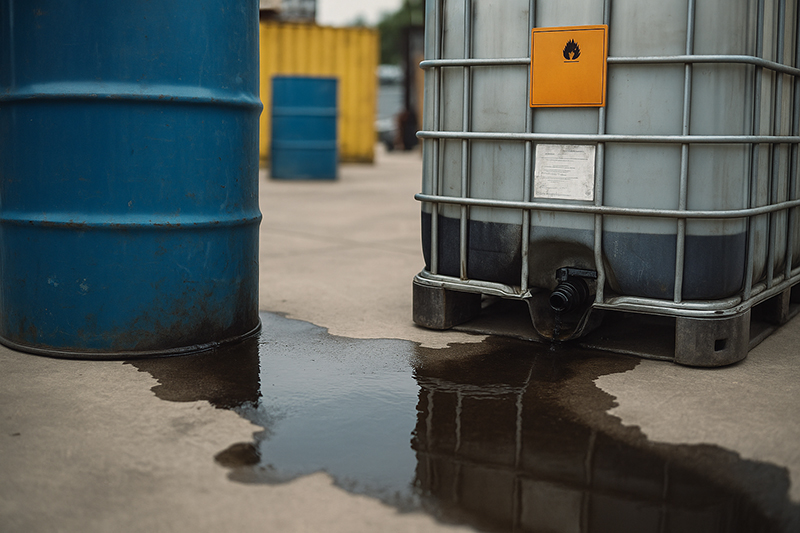
How spill containment works
The container stands on a deck or grating above a sump. If liquid escapes, the sump holds it below the working surface. Grating design, sump depth and access for cleaning differ between products. Some models have removable grating. Drainage features should be checked on the exact product rather than assumed across the range.
The stored liquid also matters. PP, HDPE and other plastics do not have the same compatibility with every chemical, concentration or temperature. Confirm material compatibility for the specific liquid before ordering.
Compare drum count, capacity and handling
Start with the number and size of containers. A one-drum pallet uses less floor space, while two-drum and four-drum models provide a larger platform. IBC-style options need enough footprint and load support for the intended container.
Next, compare the required containment volume with the sump capacity stated for the model. Check static and dynamic load values separately, and consider how the loaded unit will be positioned. Forklift access, transfer height and the available aisle or floor space should match the actual handling route.
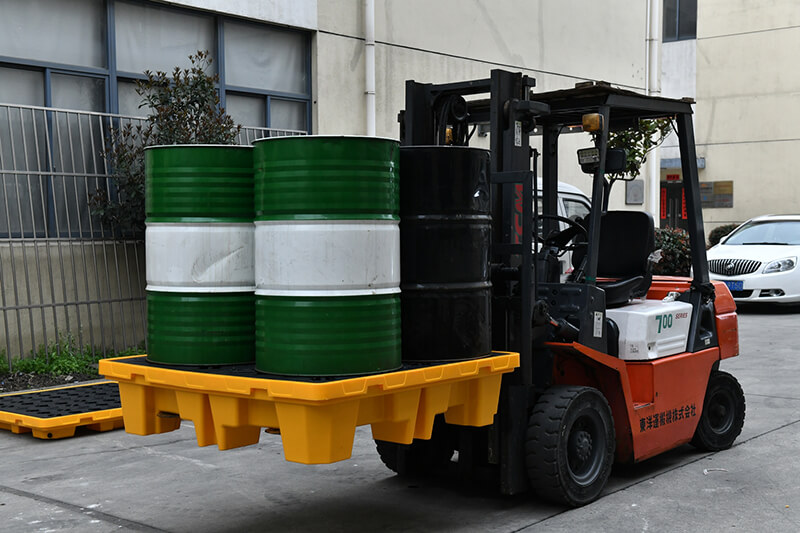
Where spill pallets are used
Common applications include chemical and lubricant storage, maintenance workshops, filling or transfer points, laboratories and warehouse drum areas. The same product will not suit every location. Indoor or outdoor use, floor condition, cleaning access and the site’s spill response process should all be considered.
What to confirm before ordering
Prepare the container quantity and dimensions, filled weight, liquid type, required containment volume, preferred platform height, handling equipment and available floor space. Also note whether removable grating or a drainage feature is required. These details allow a supplier to compare actual configurations instead of recommending a pallet from drum count alone.
Review the available plastic spill pallet options to compare the current one-drum, two-drum, four-drum, IBC-style and laboratory formats.