
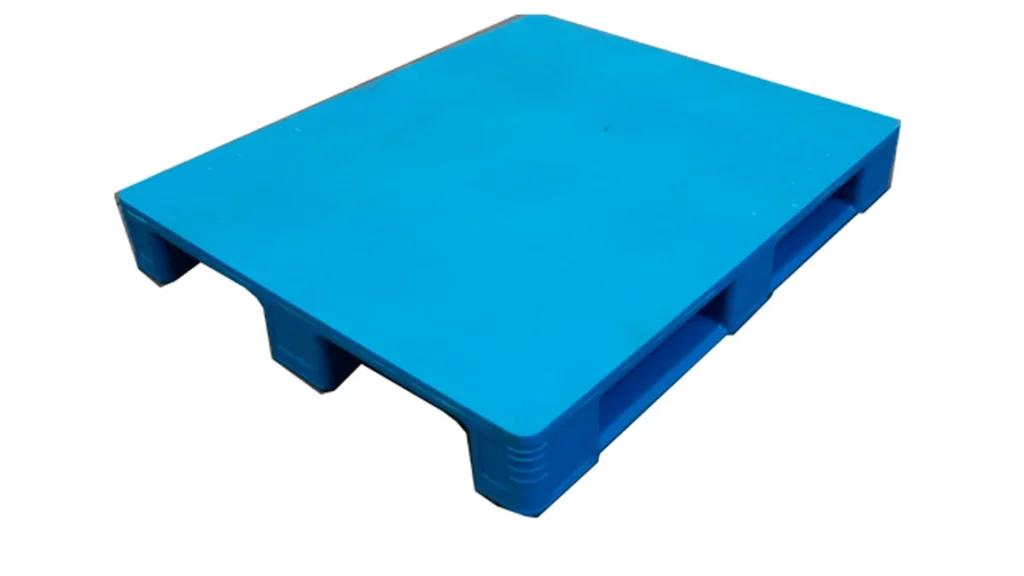
Cold storage puts a pallet through a different routine from an ordinary dry warehouse. Loads may sit for longer periods, move across wet floors, pass through doorways and be handled when the plastic, packaging and equipment are all cold. Buyers should therefore begin with the operating route rather than choosing a pallet from its footprint alone.
This guide sets out the questions that help a supplier compare plastic pallet structures for a chilled or frozen operation. The final choice should be confirmed against the real load, temperature range and handling method.
Describe the temperature range and time in storage
“Cold storage” can mean a cool dispatch area, a chilled room, a freezer or a route that passes between several of them. Tell the supplier the normal and lowest operating temperatures, how long a loaded pallet remains in each area, and whether it is moved directly from a cold room into ambient conditions. Those details affect what needs to be checked before a model is approved.
It also helps to separate the pallet’s working environment from the product’s packaging. Cartons, crates, bags and shrink wrap can react differently to condensation and long storage. A stable load pattern matters as much as the pallet itself.
Check the load support at the deck
Start with the units that actually touch the deck. Small cartons, flexible bags and crates with narrow feet do not distribute weight in the same way. Show the planned layer layout, the number of layers and the total loaded height. The arrangement should cover the usable deck with small, even margins and without cargo overhang.
Flat decks can be useful where broad load contact and a smooth cleanable surface are priorities. Other deck layouts may be suitable for particular packs or cleaning routines. The correct choice depends on the real contact points, not on a generic description such as “heavy duty.”
Map the handling route before discussing the base
List every handling step in sequence. A pallet may be placed on the floor, moved by forklift, moved by a pallet jack, held in racking or stacked with other loaded pallets. Each step places the load and base under different support conditions.
Do not assume that a pallet approved for floor storage is automatically suitable for beam racking or for a particular pallet-jack entry. If racking is part of the route, provide the beam support details and the actual loaded weight. If pallet-jack handling is required, confirm that the selected base and entry direction match the equipment used on site.
Plan for moisture, cleaning and changeovers
Cold operations often involve condensation, washdown areas or frequent cleaning. Buyers should explain whether the pallet needs drainage, a closed deck, easy access for cleaning, or a surface that avoids trapping residue from the packaged goods. The requirement comes from the product, the hygiene routine and the plant layout, so it should be described in practical terms.
For food-related cold storage, the plastic pallets for food and beverage applications category can help buyers review relevant pallet options. A category page is a starting point, not a replacement for matching a real model to the route.
Test the full loaded unit
A pallet test is most useful when it reproduces the work that happens in the facility. The intended cartons or crates should be loaded in the real pattern, at the real height, and then moved with the equipment used on site. If the route includes racking, the test should use the relevant support arrangement. If it includes pallet-jack use, the pallet should be picked up in the same direction used by operators.
Check the complete unit before and after handling. Look for load movement, package damage, changes in deck contact and any issue that appears at a particular transfer point. A practical trial can also show whether wrapping, strapping or a top sheet is required for the actual load. It is better to resolve those details before a full purchase than after pallets have entered a cold-store cycle.
Consider the return route and empty storage
Reusable pallets also need a plan when they are empty. Ask where they are collected, washed and stored before the next cycle. A system that works for loaded storage can be inefficient if empty pallets take too much room or cannot be handled safely in the return area. Where return space matters, compare empty-pallet storage as part of the whole route.
Information to send with an enquiry
- Normal and lowest operating temperature, plus expected storage duration.
- Unit-load type, dimensions, weight, layer pattern and total height.
- Floor, forklift, pallet-jack, racking and stacking conditions.
- Cleaning, washdown and hygiene requirements.
- How empty pallets are returned and stored.
A supplier can use that information to review a specific pallet structure against the application. For a fuller explanation of why floor, dynamic and racking loads should be treated separately, see our plastic pallet load ratings guide.