
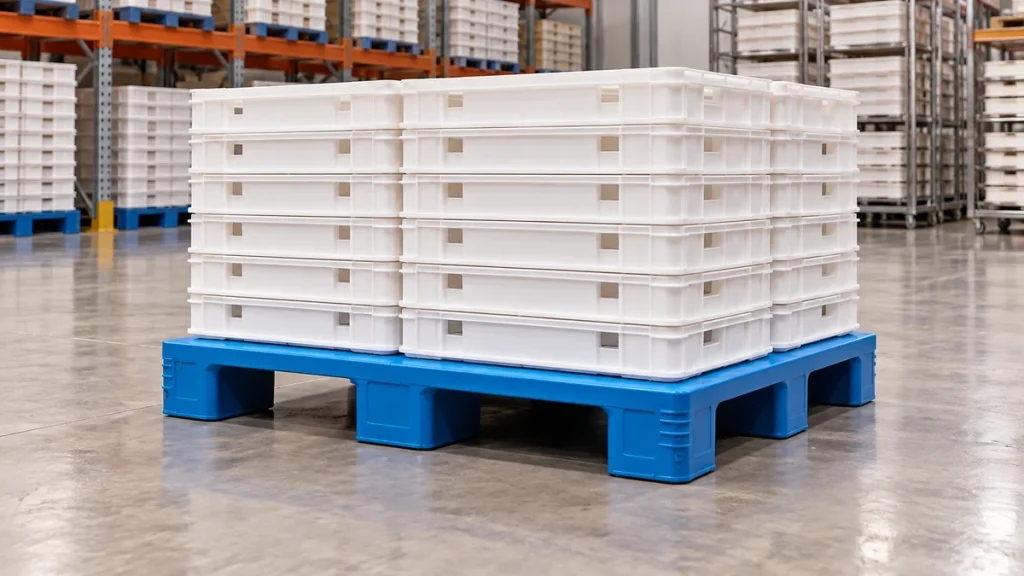
Bakery trays create a pallet load with many small contact points. The trays may be stacked empty, filled with packaged goods or moved between cooling, storage and dispatch areas. Their feet, rim shape and stack pattern affect how the load sits on the pallet. Buyers should review the real tray arrangement before choosing a plastic pallet.
A pallet for bakery trays should be assessed with the normal number of trays per layer, the loaded height, the restraint method and the handling route. A general product description cannot show whether the daily tray pattern is stable.
Measure the tray footprint and stacking pattern
Start with the outside length and width of the tray, its base feet or runners, and the weight of a full tray. Then show the supplier how many trays sit in one layer and whether the layers are aligned or cross-stacked. A tray can have a broad outside footprint but only a few small points that touch the pallet deck.
Keep the loaded trays within the usable pallet area with small, even margins. A tray that projects beyond the edge is easier to strike in a narrow aisle or during vehicle loading. A top-view layout and a side-view stack drawing make the support pattern clear.
Check deck support under the actual tray feet
Tray feet and lower rims place the load in specific locations. The deck should support those locations and any slip sheet used under the first layer. A flat deck, a grid deck or another structure may be suitable for different tray patterns, but the decision should follow the real contact areas.
Ask the supplier to review the base tray layer rather than only the total number of trays in the stack. Changes in tray model, tray orientation or spacer use can change the contact pattern even when the total load weight remains similar.
Include cleaning and handling conditions
Bakery distribution often involves routine cleaning, dust and frequent internal movement. Describe the cleaning method and the normal warehouse conditions together with the tray pattern. The selected pallet needs to fit the operating routine as well as the load.
Also list every handling point. The route may include forklift movement, pallet-jack movement, floor storage, short staging periods or vehicle loading. Each condition supports the pallet differently. If racking is part of the route, send the beam support details and loaded weight for a model-specific review.
Separate loaded trays from empty-tray returns
Empty bakery trays and empty pallets may return through a different route from full product. The space used in the return area can matter, but it should not override the support needs of the loaded tray stack. Review both stages with the supplier.
For the empty-pallet side of a return route, our nestable plastic pallets for return logistics guide explains the information that affects storage after unloading. The loaded tray arrangement still needs its own check.
Test restraint with a normal dispatch load
Stretch wrap, straps or corner protection can help retain a completed stack, but they do not correct an unstable base layer. Use the same restraint method that will be used in dispatch and check the load after normal turns, braking and vehicle transfers. Include partially loaded trays if those occur in daily operation.
The plastic pallets for food and beverage applications category is a useful starting point for related options. The final choice should follow the tray geometry, handling equipment and storage support, not the category label alone.
Information to send with an enquiry
- Tray dimensions, base-foot layout and loaded tray weight.
- Trays per layer, total layers, total height and total load weight.
- Slip sheets, dividers, wrap, straps or corner-protection details.
- Forklift, pallet-jack, floor, racking, stacking and vehicle conditions.
- Cleaning conditions and empty-pallet return requirements.
Those details let a supplier compare the real tray load with an appropriate pallet structure. For a separate explanation of common load terms, read our plastic pallet load ratings guide.