
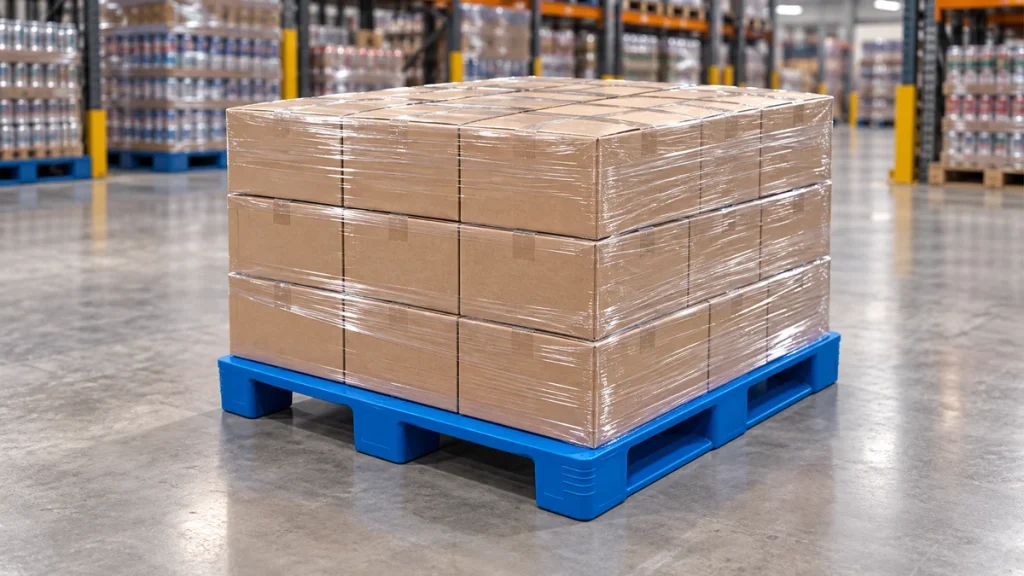
Beverage cans are often shipped in trays, cartons or shrink-wrapped multipacks. That makes the pallet load look regular, but regular does not always mean well supported. The pack footprint, the layer pattern and the transfer route all affect the pallet choice.
This guide covers the practical information a buyer should prepare before selecting plastic pallets for beverage-can distribution. It is not a substitute for a loaded trial with the actual packs and handling equipment.
Begin with the packaged unit, not the can
Pallets do not normally contact individual cans. They contact the tray, carton or wrapped multipack that contains them. Start by recording the outside dimensions and weight of each shipping unit. Then show how many units sit in a layer and whether the pattern changes on alternating layers.
A mixed pack pattern can leave gaps or place a carton edge near a weak point in the layer above. The full layer should sit on the usable deck with small, even margins. Cartons or trays should not overhang the pallet. A simple layout drawing is often enough to show whether the actual load has broad support or only a few contact points.
Check deck contact and carton condition together
Beverage cartons can soften or lose stiffness when they are exposed to moisture, refrigerated handling or repeated transfers. Thin trays and light cartons also behave differently from a rigid corrugated case. A deck that provides broad contact may be useful for some loads, while other pack types may need a different arrangement. The right decision comes from the pack construction and the way its weight reaches the pallet.
Ask the supplier to review the planned layer pattern, total load weight and storage time together. Do not choose a structure simply because a similar pallet footprint was used for a different beverage pack.
Map the handling route from production to delivery
Write down every movement after palletising. The load may be collected by forklift, moved through a chilled staging area, held on the floor, placed in racking, loaded into a vehicle and handled again at a distributor. Each stage can change the support under the base or the forces acting on the packed cans.
Pallet-jack access, forklift entry direction and racking support should be checked against the selected model. A pallet that works for floor movement is not automatically approved for beam racking. If a load goes into racking, provide the beam support details and the actual loaded weight for a model-specific review.
Look at load stability before adding more wrap
Stretch wrap can hold a load together, but it cannot correct a poor layer pattern or unsupported cartons. Check whether the outer packs remain square when the load is turned, braked or transferred. If top layers move during a trial, the answer may be a different packing pattern, a top sheet, corner protection or a revised wrap method. It may also show that the pallet deck or base needs to be reconsidered.
Keep the load within the pallet footprint. A tight-looking overhang can be damaged easily when pallets pass close to a rack upright, a door frame or another load in a vehicle.
Plan for wet and returnable operations
Distribution routes may include condensation, wet floors, cleaning areas or outdoor transfers. Explain what the site actually does. The supplier can then consider cleaning access, drainage and the practical condition of the packs. If the pallets return from distribution, include the empty-pallet collection and storage plan in the enquiry.
For a wider view of pallet options used in beverage and food operations, see the plastic pallets for food and beverage applications category. It is a useful starting point, but the final model still needs to match the real unit load and route.
What to include in a pallet enquiry
- Pack or carton dimensions, unit weight and the number of units per layer.
- Layer pattern, loaded height, total weight and wrapping method.
- Forklift, pallet-jack, floor, racking and vehicle-loading conditions.
- Whether the route includes chilled areas, moisture or washdown.
- How empty pallets are returned and stored.
With those details, a supplier can compare a real pallet structure against the job instead of making a recommendation based only on the product category. For a separate explanation of floor, dynamic and racking load terms, read our plastic pallet load ratings guide.