
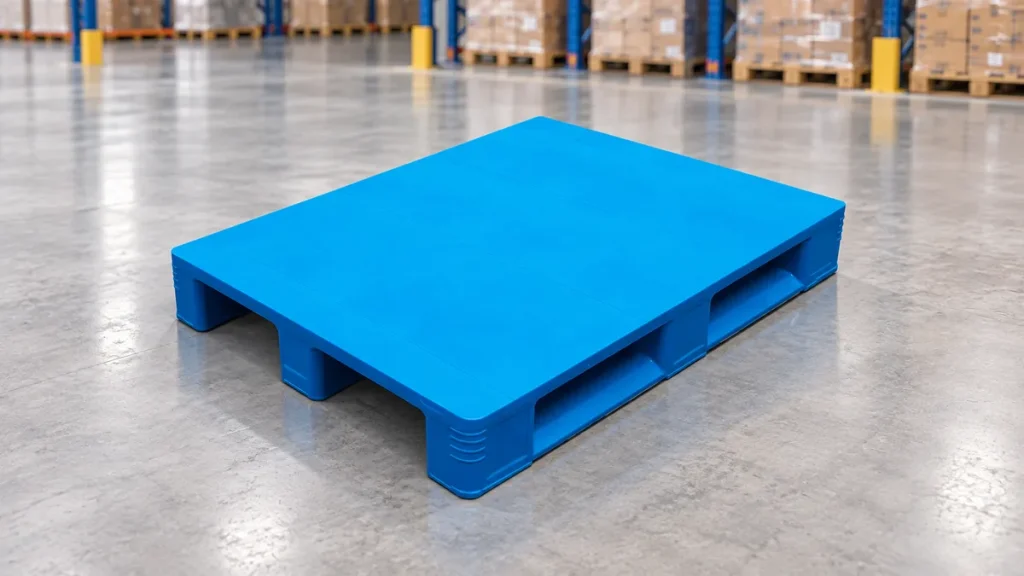
A 1200×800 mm footprint is only the starting point for a pallet specification. Two pallets with the same length and width can behave quite differently when a load is set down, moved or stored. A buyer comparing models should look at the deck and the underside before treating either one as a substitute for the other.
SINOPALLETS currently lists both a 1200×800 nine-leg grid pallet and a 1200×800 flat-deck three-runner pallet. They share a footprint, but their deck contact and base layouts are different. This guide explains the checks that help a warehouse team decide which design deserves a closer trial.
Start with the load, not the pallet label
Measure the actual load base: cartons, trays, sacks or a rigid container. Note where its weight reaches the deck. A small carton can bridge an opening on paper yet sag once it is filled and stacked. A rigid crate may contact the pallet only at its feet. For either load, a top-view drawing of the packing pattern is more useful than a general request for a “heavy-duty” pallet.
A grid deck leaves open areas between ribs. Check whether the load base has enough contact where it needs support. A flat deck gives a more continuous contact surface. That can help when the bottom of a carton or tray needs broader support, although it does not remove the need to inspect the load itself. Packaging strength, overhang and point pressure still matter.
Compare the underside on the real handling route
The nine-leg model has individual feet and is presented as a nestable pallet. The three-runner model has continuous runners beneath its flat deck. Those differences matter when pallets pass over floor joints, enter a vehicle or sit on storage equipment. Ask the operator to mark every transfer point along the route, including those outside the main warehouse aisle.
For forklift handling, confirm tine width, fork spacing, insertion direction and the height of the load. For a pallet jack, check wheel paths and the way its load wheels leave the pallet base; do not assume that an entry opening alone proves compatibility. A short trial with the actual truck and load is preferable to a claim based only on a product photograph.
Separate floor storage from rack support
A floor-stacking plan and a beam-racking plan impose different support conditions. The nine-leg pallet should not be selected for a rack merely because its footprint fits the bay. Where racking is involved, confirm the exact model, support direction, beam spacing, load distribution and the relevant tested rating with the supplier. The same caution applies to a reinforced three-runner version: its published configuration and the load case must match the planned installation.
If pallets will be stacked with goods on them, inspect how the upper pallet contacts the load below. A nominal static load figure does not describe every carton pattern or every uneven floor. Record the planned stack height and any intermediate boards or trays, then test the actual pack.
Include the empty return in the comparison
The nine-leg structure can be useful when empty-pallet nesting is part of the route. Measure the real nested height and count for the proposed model rather than relying on a generic space-saving percentage. A three-runner pallet may be the better candidate when the loaded route calls for a different base and deck, even if its empty return takes more room. The useful comparison is total operating fit, not only the outbound pallet count.
Cleaning can also change the decision. A flat surface and an open grid present different access points for washdown, drying and inspection. Ask the site team which surfaces collect residue in its process, and check the cleaning method against the actual pallet material and construction. Do not infer a food-contact certification from a product name or an application category.
A practical purchase check
Send the supplier the load footprint and weight distribution, the loaded and empty handling routes, the exact forklift or pallet-jack models, and the storage support details. Request a drawing or sample of the specific 1200×800 pallet being quoted. If steel reinforcement, material or height can vary by option, identify the option in the quotation so the tested configuration and delivered pallet are the same.
The 1200×800 plastic pallet category is a useful place to compare available models. Use it to shortlist structures, then validate the selected pallet against the real load and equipment before ordering. A shared footprint makes comparison easier; it does not make the two designs interchangeable.