
What to check before choosing a sleeve pack container
Choosing an automotive sleeve pack container starts with the part, not the outside dimensions alone. Compare the component size and weight, protection requirement, loading pattern, handling equipment, storage method and empty-return route.
This guide explains how the pallet base, PP sleeve, lid and optional inner fittings affect those decisions. For the corresponding product and customization options, review our automotive sleeve pack container solution.
How a sleeve pack container is built
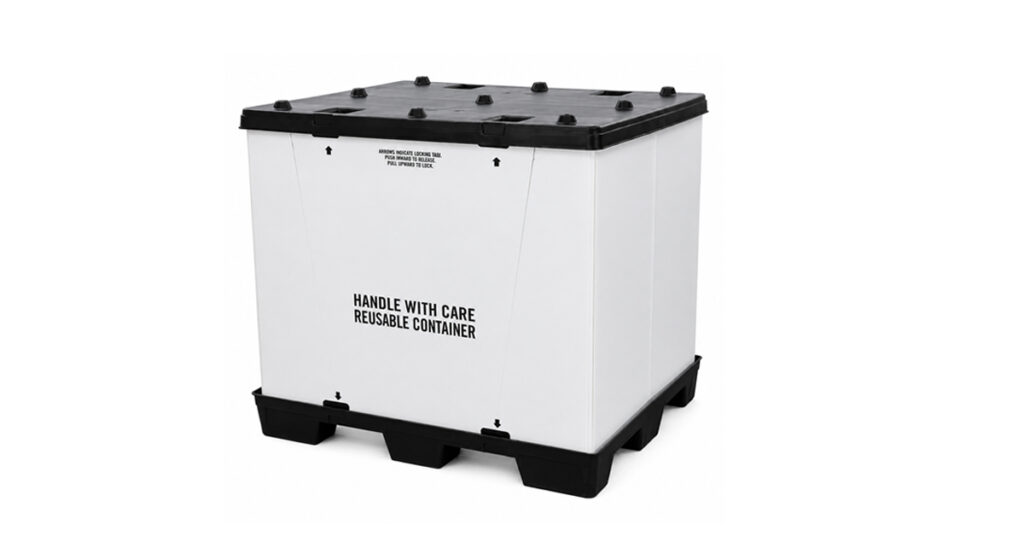
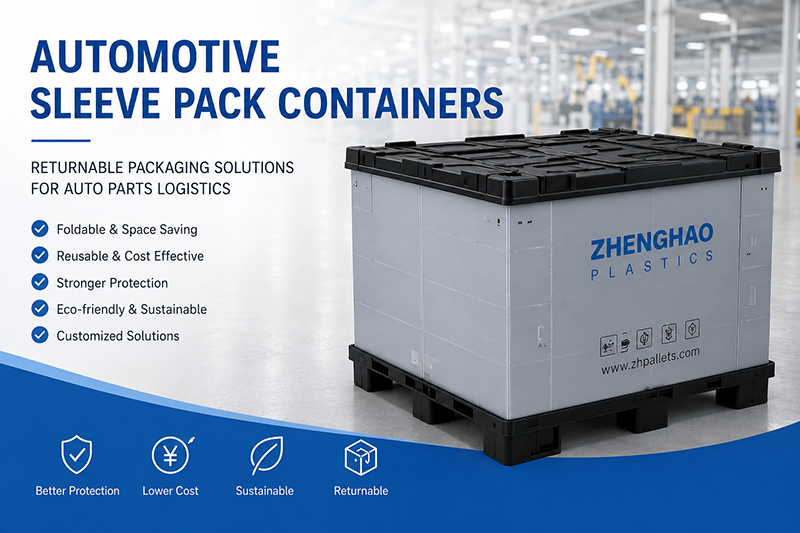
An Automotive Sleeve Pack Container is a foldable and reusable packaging system widely used for automotive parts transportation and storage.
A standard sleeve pack container usually consists of:
- Plastic pallet base
- PP honeycomb sleeve or PP hollow sheet sleeve
- Plastic lid
- Customized inner dividers or foam inserts
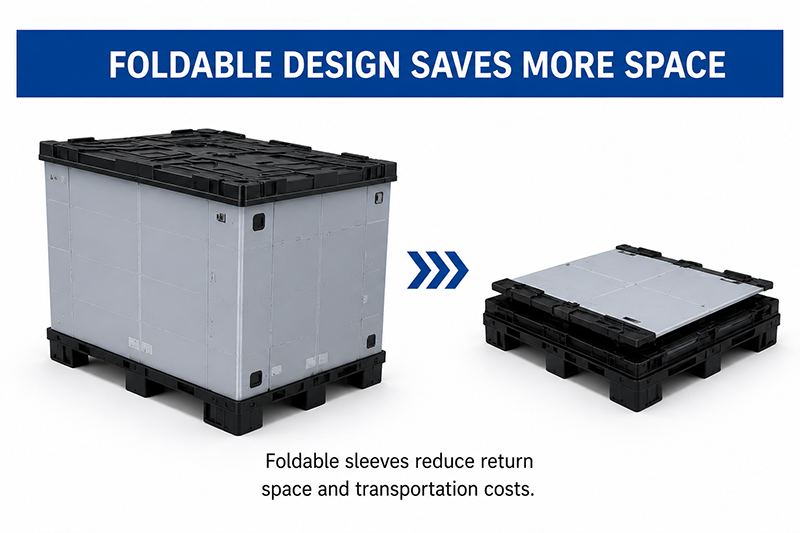
The foldable structure allows the container to save significant storage space and reduce return transportation costs when empty.
Automotive sleeve pack containers are widely used in:
- OEM automotive factories
- Tier 1 and Tier 2 suppliers
- Automotive distribution centers
- Warehouse logistics systems
Selection factors for automotive parts
Empty-return volume
One of the biggest advantages of automotive sleeve pack containers is their collapsible structure.
When empty, the sleeves can be folded down, greatly reducing:
- Warehouse occupation space
- Return transportation volume
- Storage costs
- Container loading costs
This makes foldable packaging containers ideal for international automotive supply chains.
Reuse and operating cost
Compared with disposable carton packaging, sleeve pack containers are intended for repeated use in a returnable logistics cycle.
Benefits include:
- Lower packaging replacement costs
- Reduced packaging waste
- Better sustainability performance
- Lower total operational cost
For a closed-loop route, repeated use can reduce recurring purchases of disposable packaging.
Part protection and inner fittings
Automotive components are often high-value and precision-manufactured products.
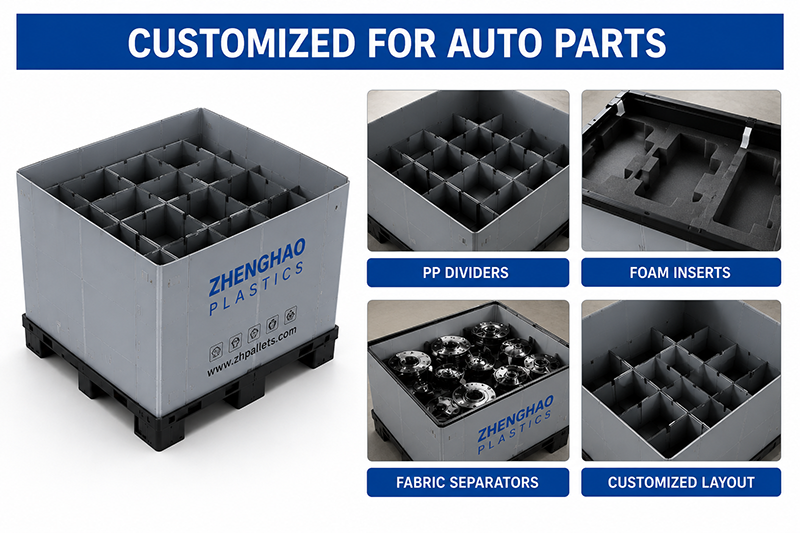
Automotive sleeve pack containers can be customized with:
- PP dividers
- Foam inserts
- Fabric separators
- Anti-scratch protection
- EPE cushioning materials
These customized packaging solutions help reduce transportation damage and improve product safety.
Suitable parts include:
- Automotive bumpers
- Headlights
- Plastic trim parts
- Metal components
- Electronic parts
- Injection molded parts
Handling and automation
Modern automotive factories increasingly use:
- AGV systems
- Conveyor systems
- Automated warehouses
- Robotic handling systems
Confirm AGV, conveyor or robotic handling compatibility for the exact pallet base and route.
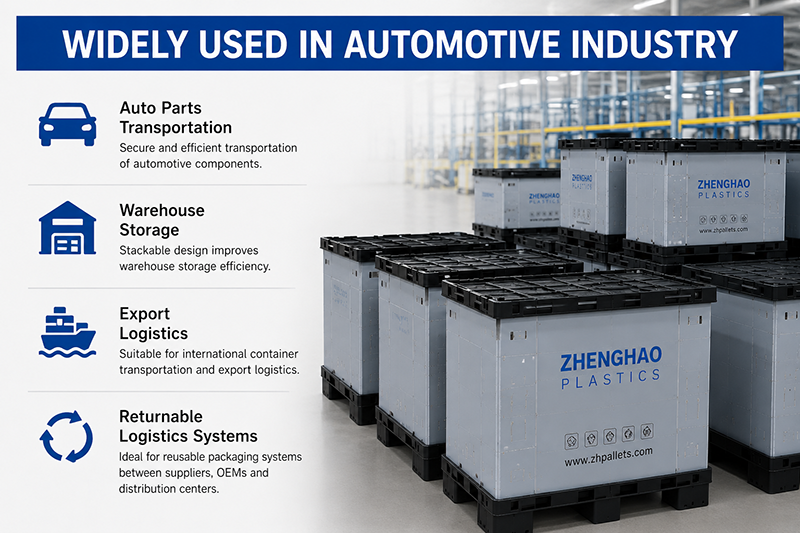
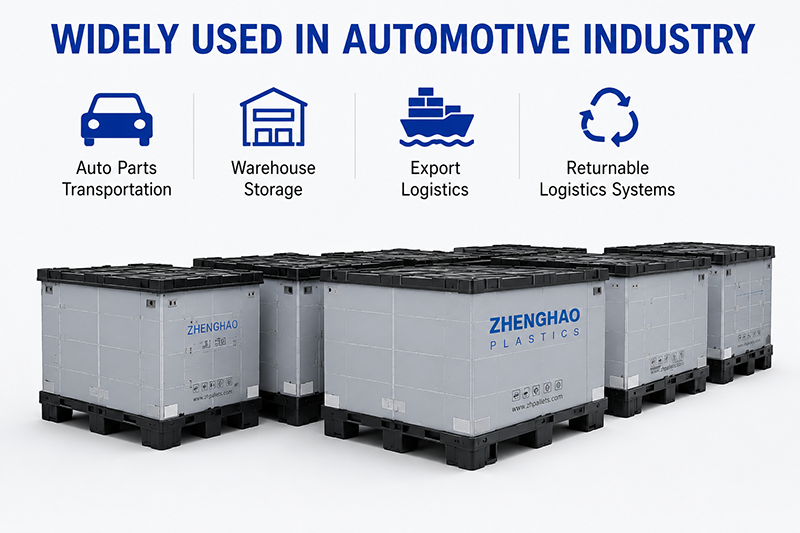
Where automotive sleeve pack containers are used
Parts transportation
Widely used for transporting automotive components safely between suppliers and OEM factories.
Warehouse storage
Stackable structures help improve warehouse storage efficiency.
Export packaging
Suitable for international container transportation and export logistics.
Returnable logistics systems
Perfect for reusable packaging systems between:
- OEM factories
- Tier suppliers
- Distribution centers
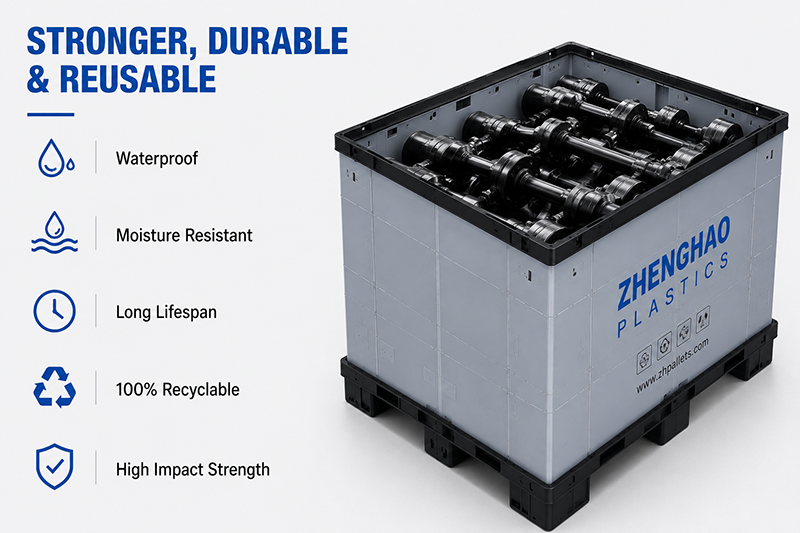
Comparing PP sleeve packs with disposable cartons
Compared with traditional carton packaging, PP sleeve pack containers provide:
| Feature | Carton Box | PP Sleeve Pack Container |
|---|---|---|
| Reusable | No | Yes |
| Waterproof | No | Yes |
| Foldable | Limited | Yes |
| Long Lifespan | No | Yes |
| Better Protection | No | Yes |
| Lower Long-Term Cost | No | Yes |
As global automotive packaging standards continue to improve, more companies are switching from disposable packaging to reusable packaging systems.
Information to confirm for a custom container
A custom sleeve pack container should be specified from the component and the logistics route. The available options shown here include:
- Custom dimensions
- Customized load capacity
- Logo printing
- Honeycomb PP sleeves
- Anti-static solutions
- Customized dividers
- RFID label solutions
- Different pallet structures
Provide the component size, weight, protection needs, loading pattern, handling equipment and return route before confirming a configuration.
Questions to ask the supplier
Ask which dimensions, pallet structure, sleeve material, inner fittings and handling conditions apply to the quoted configuration. Use data for the proposed model rather than assumptions from another container.
Final selection checklist
Before placing an order, confirm:
- Component dimensions, weight and loading pattern
- Protection and inner-fitting requirements
- Forklift, AGV or conveyor handling conditions
- Loaded storage and stacking conditions
- The empty-return route
Compare each proposal against the same operating conditions.
Explore related options: Browse heavy-duty pallet boxes for reusable bulk handling.